University of Michigan · ANTHRBIO 474 Hominid Origins · 2015
Endocasts in 3D
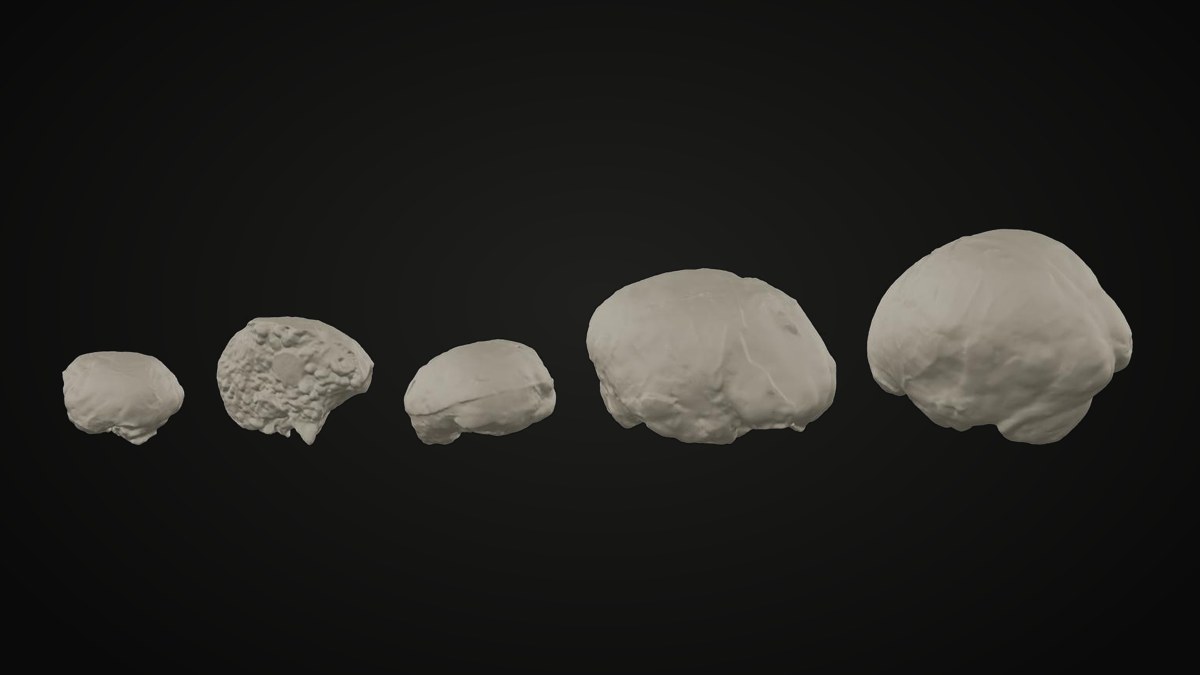
An endocast is a cast of the inside of a skull: the closest thing to a fossil brain. For Milford Wolpoff's Hominid Origins course I laser-scanned five endocast casts from his lab, then measured the casts, the scans, and 3D prints of the scans to see whether the copies are faithful enough for real measurements. Mostly, they are. The scans are below. Turn them, and take them.
(scanned + printed casts)
The scans
Drag to turn, scroll or pinch to zoom. These are lightened copies for the browser (70,000 triangles); the downloads are the full scans.
How it was done
Maximum length, width, and height of each cast with digital calipers, three times each, averaged. Volume of the three smaller casts by how much brown rice each displaced in a graduated cylinder.
Each cast was scanned with a handheld Creaform HandyScan 3D REVscan at the University of Michigan 3D Lab, and the passes stitched and cleaned up in Materialise 3-matic.
The same length, width, and height, taken on screen with 3D-Tool's measuring tool; volume straight from the closed surface.
The Taung Child, STS 60, and the unknown primate were printed on a Dimension Elite (0.254 mm layers), measured with calipers, and their volume taken by water displacement.
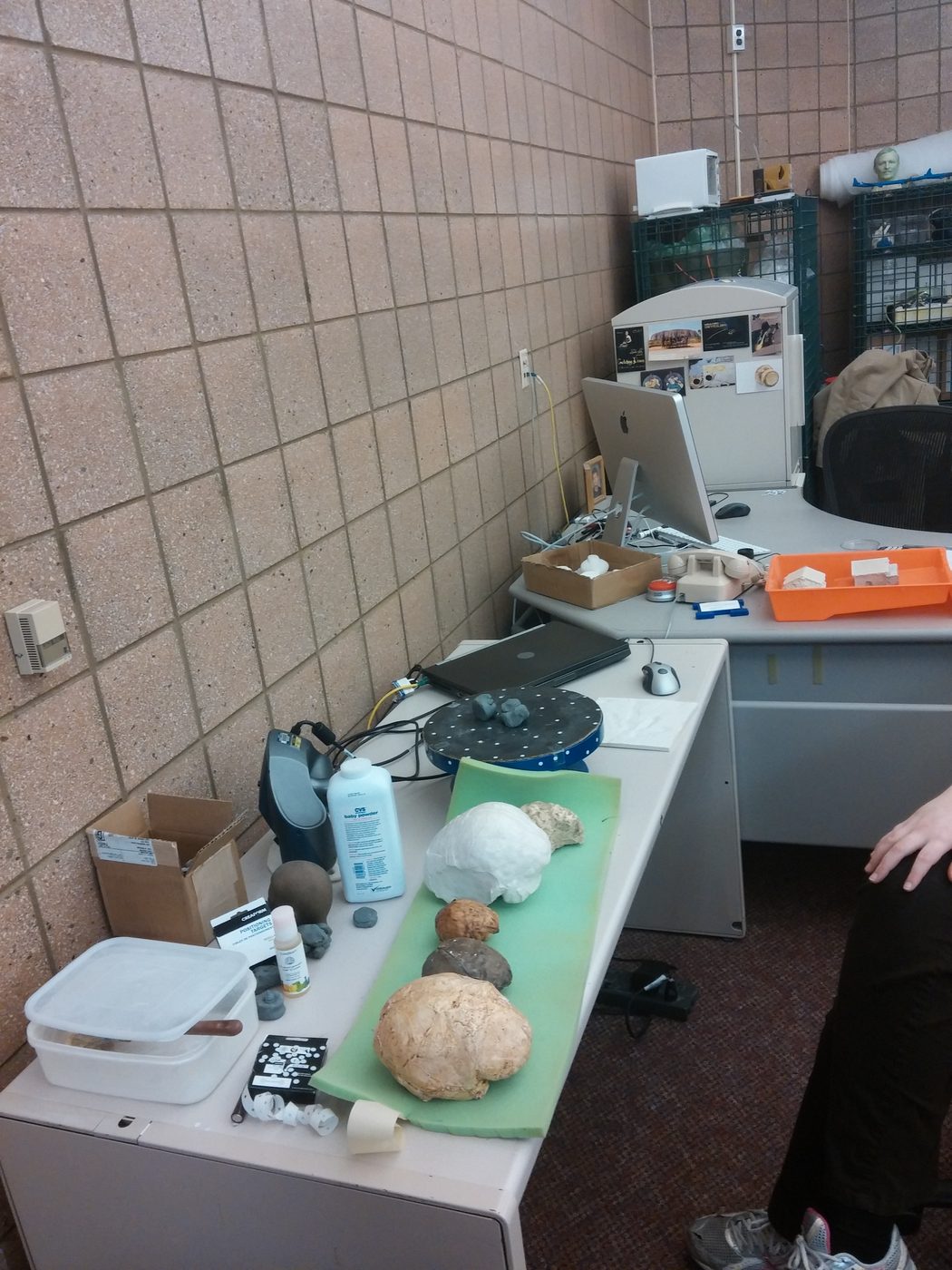
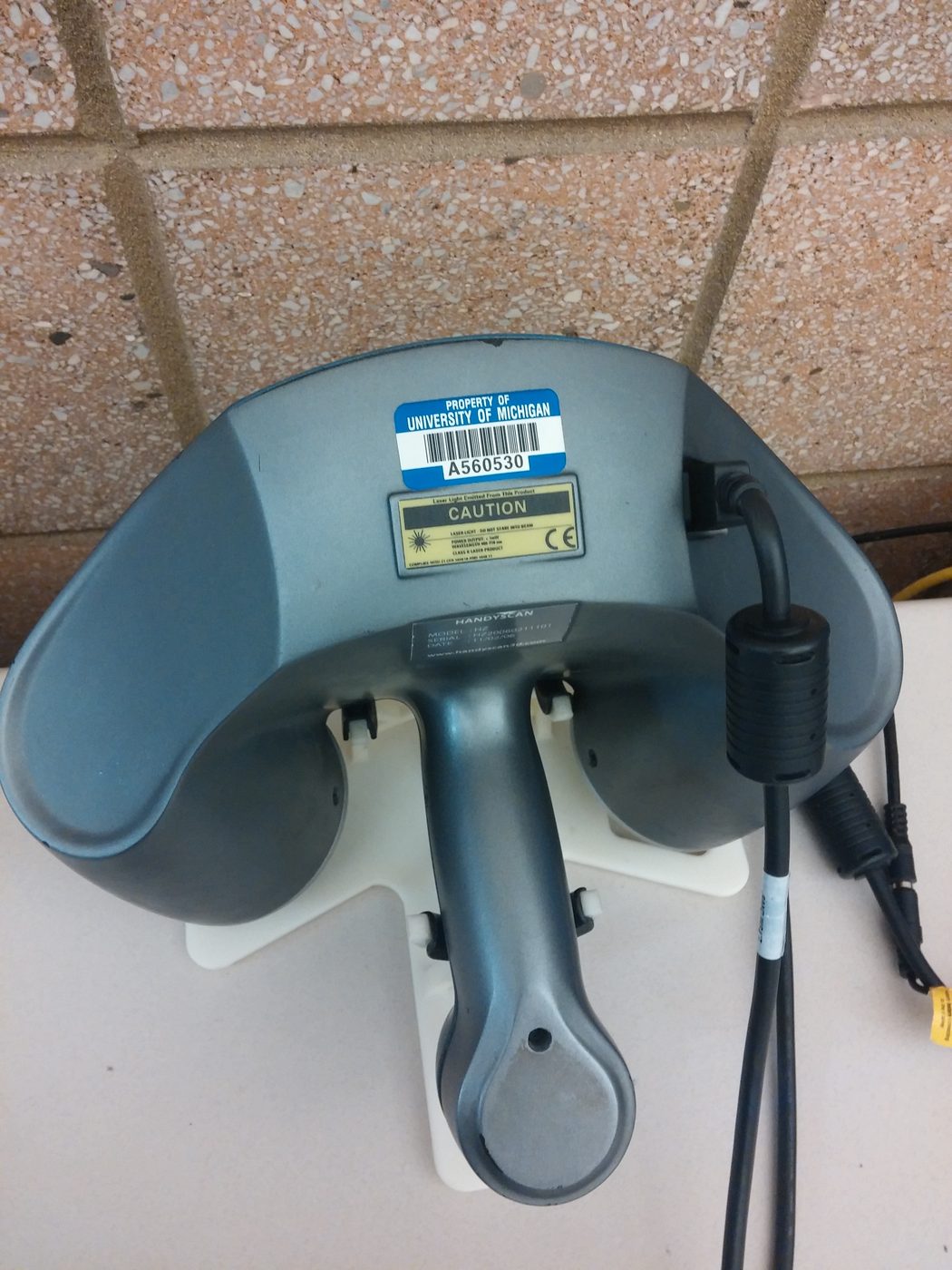
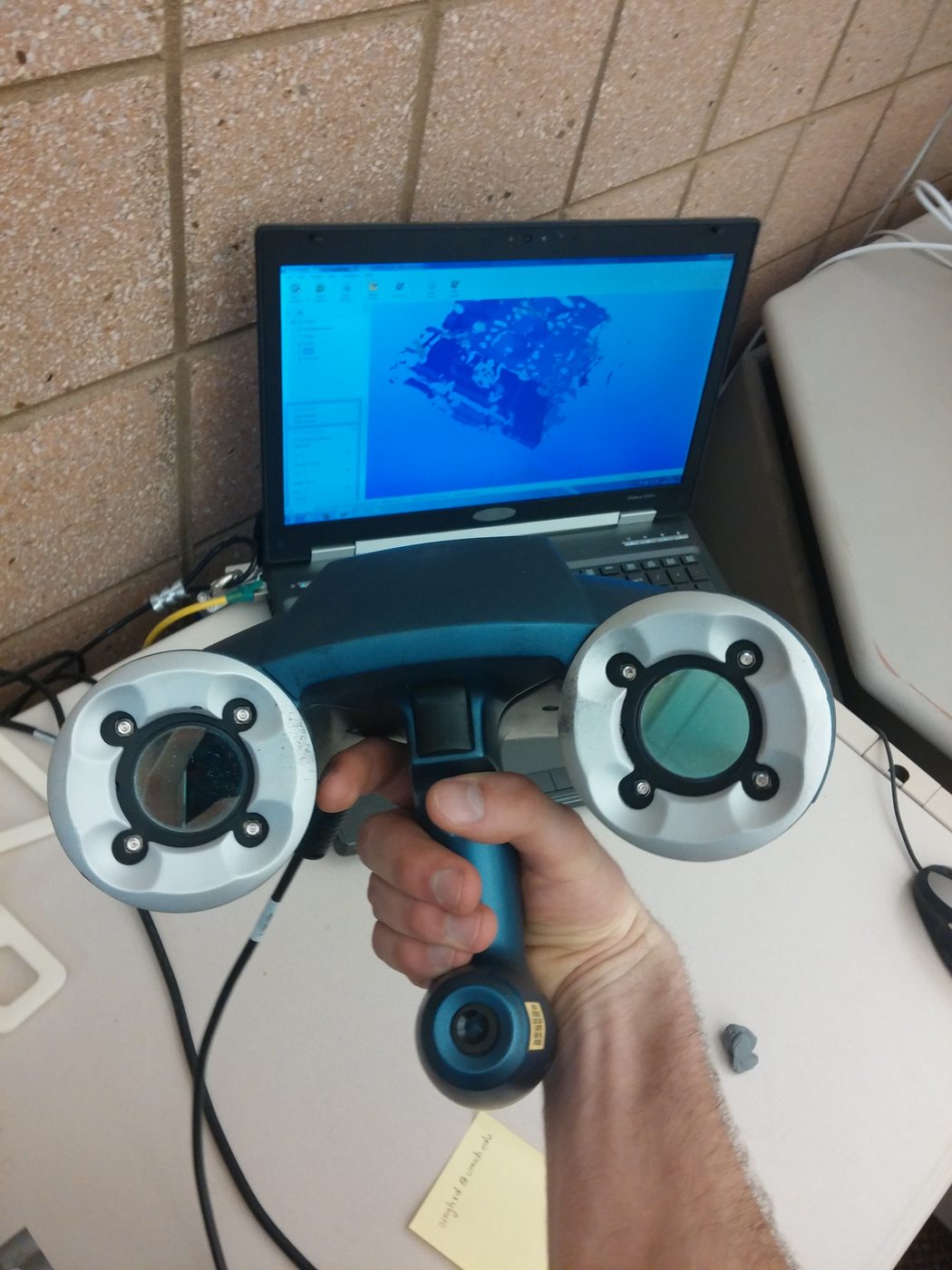
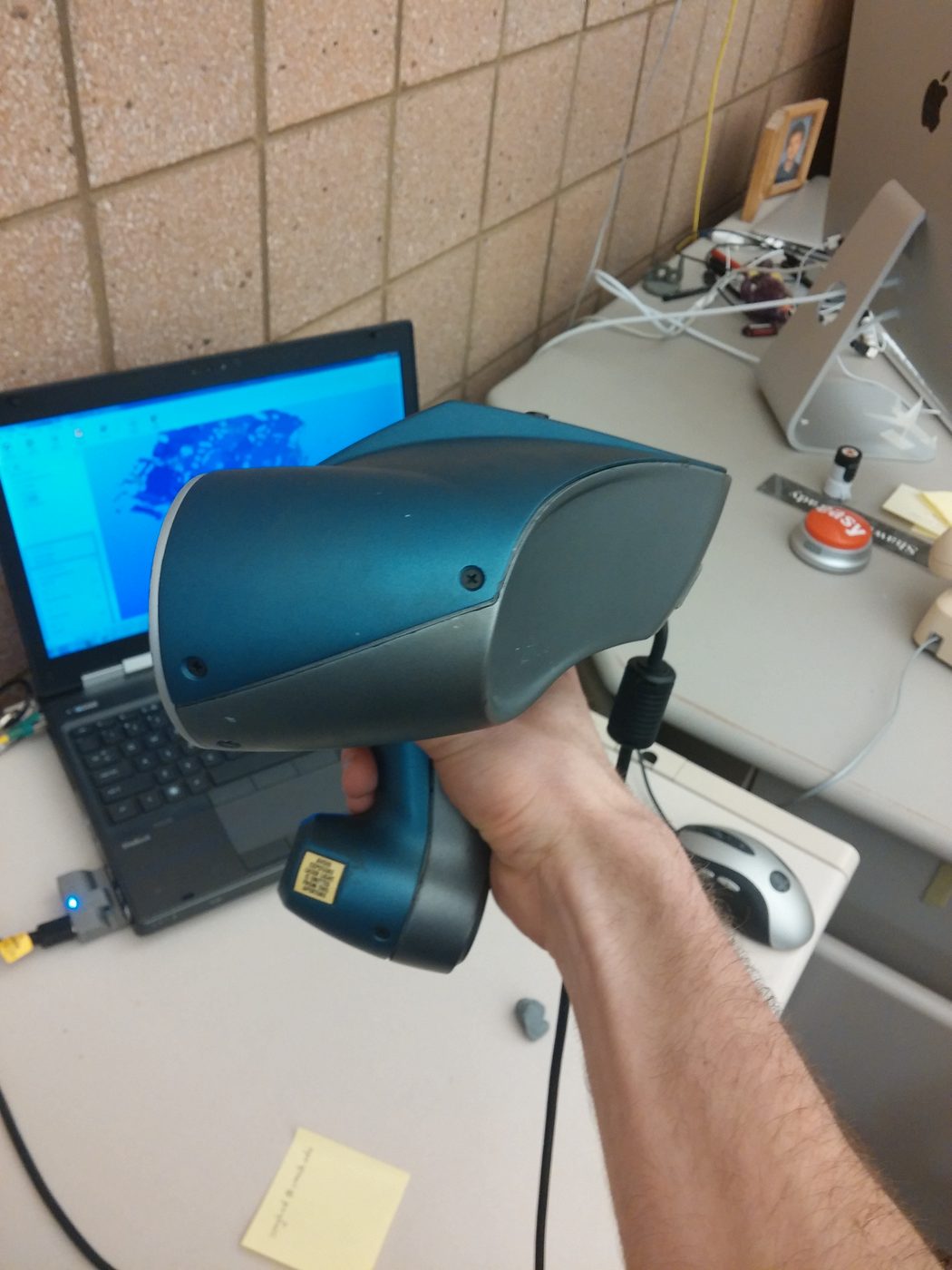
The UM 3D Lab, spring 2015: casts waiting their turn, and the handheld laser scanner.
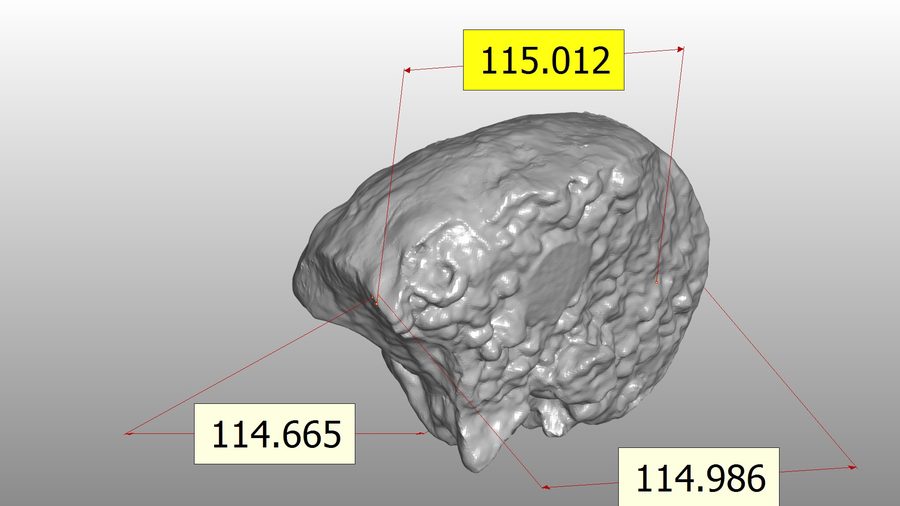
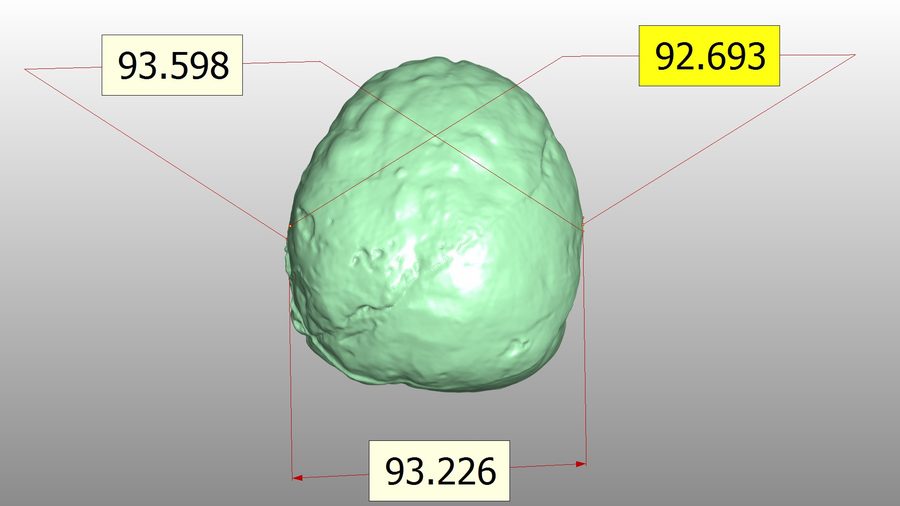
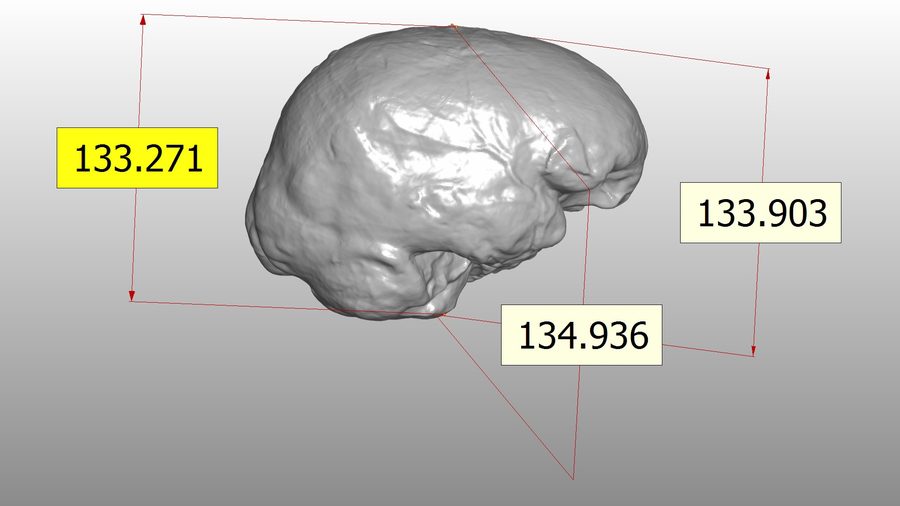
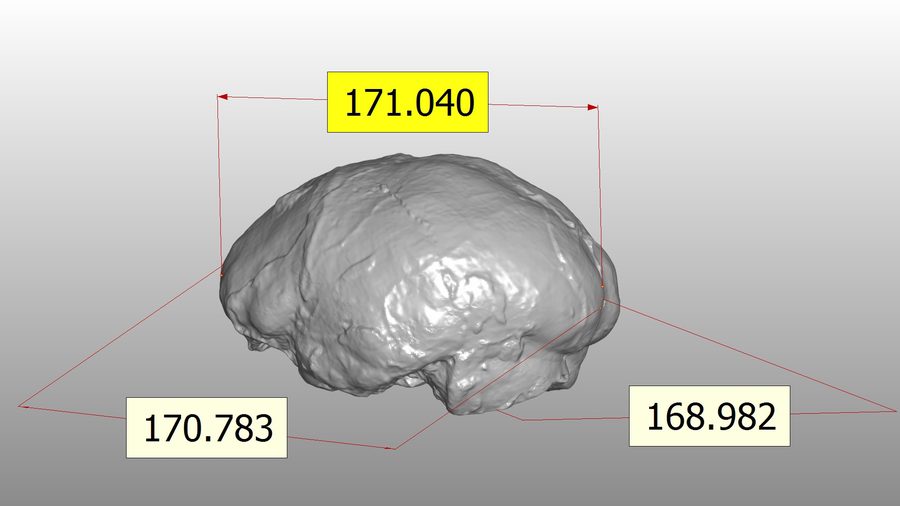
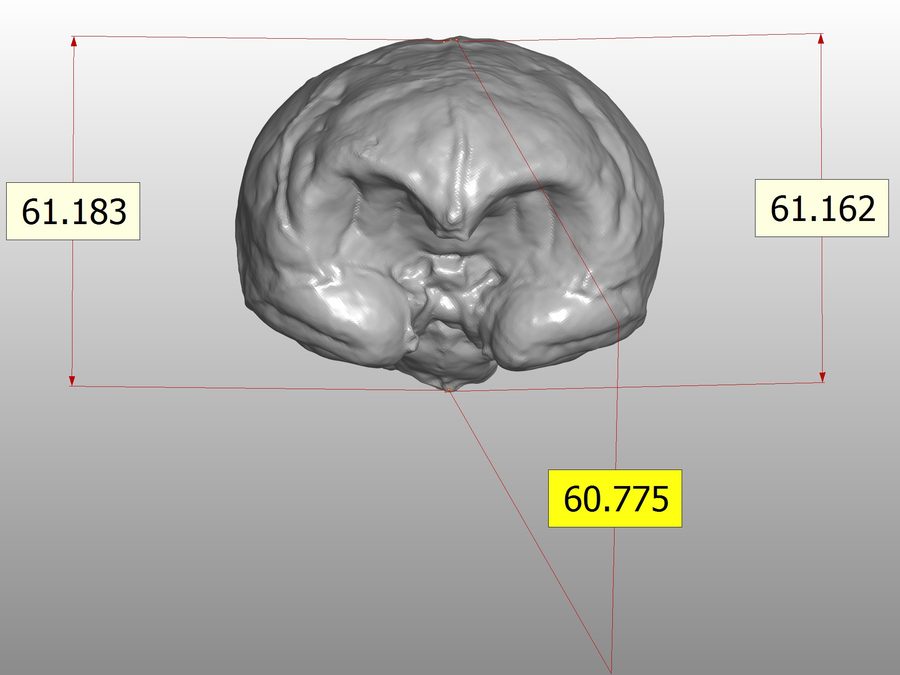
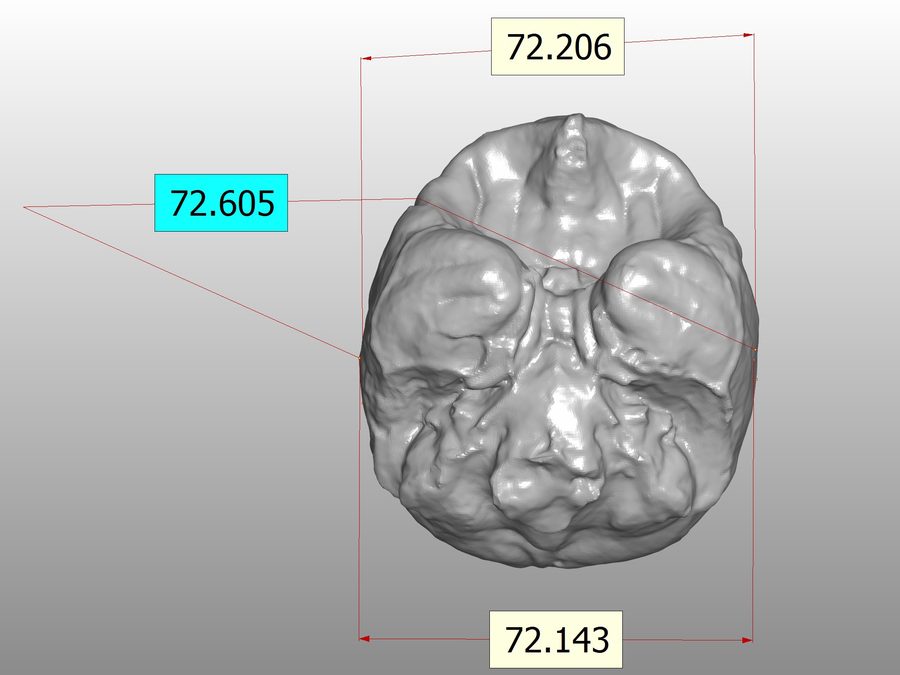
Measuring the scans in 3D-Tool. Each labelled line is one of the three repeats.
Did the copies measure like the casts?
Difference from the cast, in percent: (copy − cast) / cast. The casts' own values are the caliper averages; their volumes, rice displacement. The two large Homo casts were scanned but not printed, and their volume was not measured by displacement.
For the three casts that were both scanned and printed, every length, width, and height agreed within 1.3%, and the prints were about as close as the scans. Volume came out within 4%, the loosest of the measures, which says as much about rice and water in a graduated cylinder as about the scans. The biggest gap overall was Jebel Irhoud 2's height, 4.7% taller on the scan than by calipers: on a large, irregular cast, "maximum height" is easy to take from two slightly different places. So, for linear measurements and with student-accessible equipment, a scan or a printed copy can stand in for a cast, which matters because casts of these fossils are scarce, fragile, and expensive. Whether the scans are fine enough to compare individual sulci on the brain's surface was left for another day.
The poster
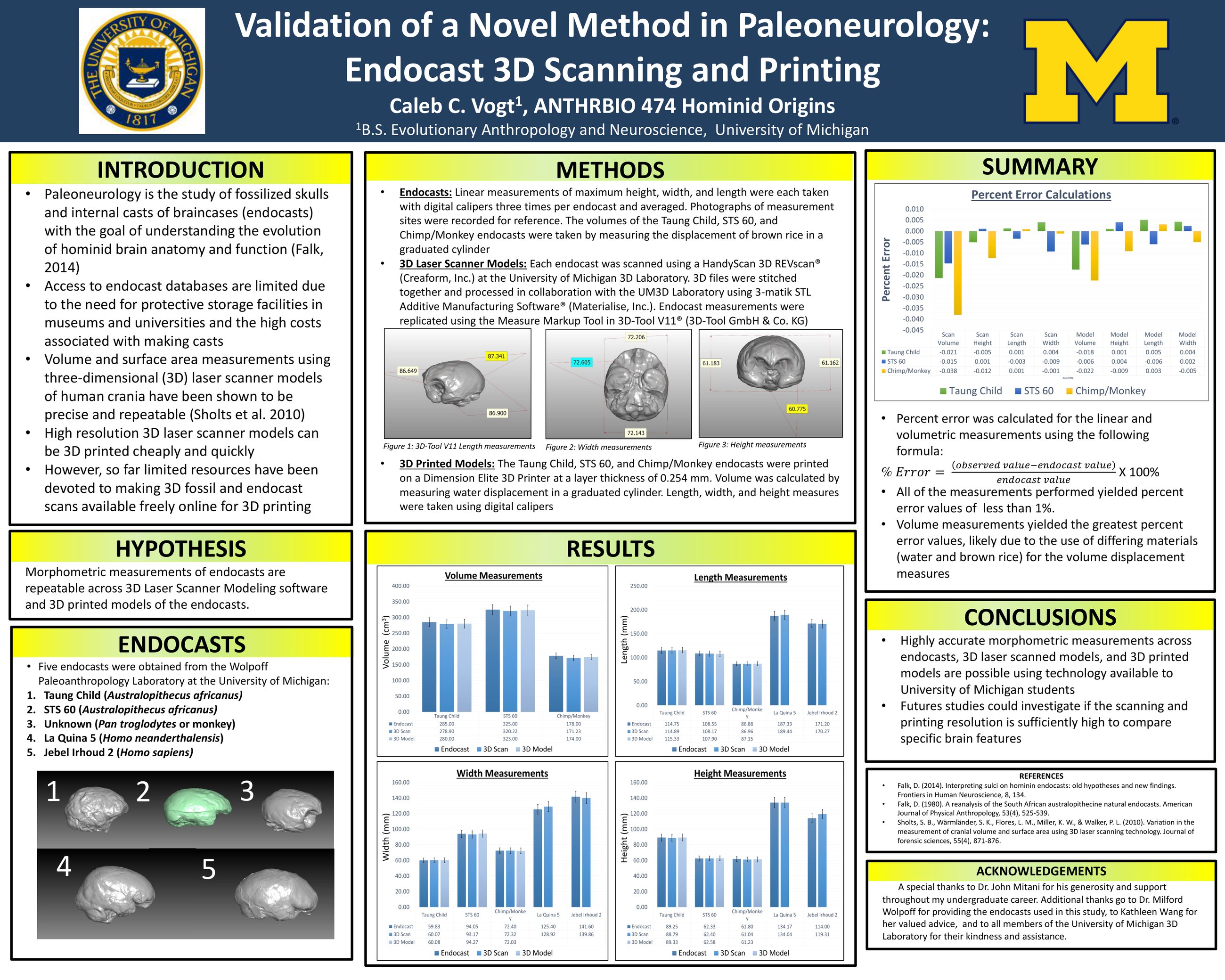
Presented at the end of the course in 2015. Download the PDF. One correction: the poster says every measurement fell within 1% error, but its own error chart is in fractions, not percent. The table above has the actual figures.
Download the scans
Full-resolution STL files, in millimetres, free to use under CC BY 4.0: print them, measure them, teach with them. Please credit "Caleb C. Vogt (2015), endocast 3D scans". Each is a scan of a cast, not of the original fossil, and is only as good as the cast.